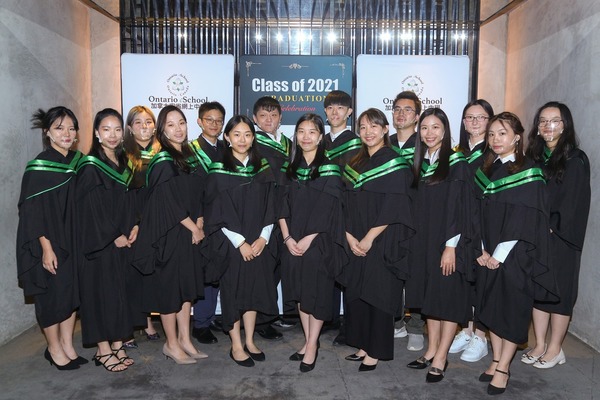


As the university admission results through JUPAS are about to be announced, they will determine whether students can enter their desired degree programmes. Michael Cho, now studying Computer Science at the University of Hong Kong (HKU), once struggled with poor grades in a traditional secondary school. He later switched to a Canadian online high school programme based in Hong Kong. With his strong results from the online school, he was accepted by several local and overseas universities. For Hong Kong students interested in overseas education or those unsuited to the DSE system, this represents an alternative pathway to further studies.
During primary school, Michael performed well academically under his parents’ guidance and smoothly entered a Band 1 secondary school. However, his grades began to decline after moving up to secondary school. Facing the pressure of potentially repeating a year, he decided to transfer to a Band 2 school to prepare for the DSE. By Secondary 5, he found himself increasingly overwhelmed and was even assessed by the school as unlikely to qualify for university or even Higher Diploma programmes.
Later, through a friend’s introduction, Michael learned about Ontario eSchool, a Canadian online high school in Ontario (Ontario eSchool). He started by taking one or two courses to get a feel for the system. According to him, OeS offers over 70 subject options, allowing students to choose based on their interests. Through this, he discovered his passion for computers. As his academic performance improved steadily, he decided to fully commit to OeS, giving up the Hong Kong secondary school curriculum. Without having to face public exams, he earned university admissions based on his coursework and internal exam results at OeS. Eventually, through the Non-JUPAS route, he chose to study his preferred major—Computer Science (Artificial Intelligence)—at HKU.
Duol Study Pathway
Michael openly admitted that he knew his chances of entering university through the traditional secondary school and DSE route were slim. “At that time, the son of my mother’s friend successfully got into the University of Toronto through OeS, so I decided to give it a try as well,” he said. “OeS’s academic advisors help design personalized study plans based on each student’s abilities, grades, and goals, so students know how to catch up effectively.” Through hard work, Michael eventually achieved an average grade of 90%. He agreed that OeS’s learning environment and teaching approach suited him much better.
During his time studying at OeS (Ontario eSchool), Michael initially spent his mornings attending classes from his traditional school via Zoom, worked on OeS assignments in the afternoons, and took OeS lessons in the evenings. At first, he followed this dual-track approach, taking only two subjects at OeS, with each lesson lasting two hours, which he found manageable. After two months, Michael realized that OeS’s learning style suited him much better and made the firm decision to leave his traditional school. Once he committed fully to OeS, he structured his days carefully—planning his assignments each morning, working on homework and previewing new topics in the afternoon, and focusing on lessons in the evening, usually attending two to three classes per week.“The learning atmosphere in traditional secondary schools is often lacking, and teachers tend to assign excessive homework and endless exam drills. I personally prefer small-class, interactive teaching, where I don’t have to rely on rote memorization. It greatly increases my interest in learning. In class, students can discuss with one another, and teachers provide plenty of feedback, which helps improve learning efficiency.
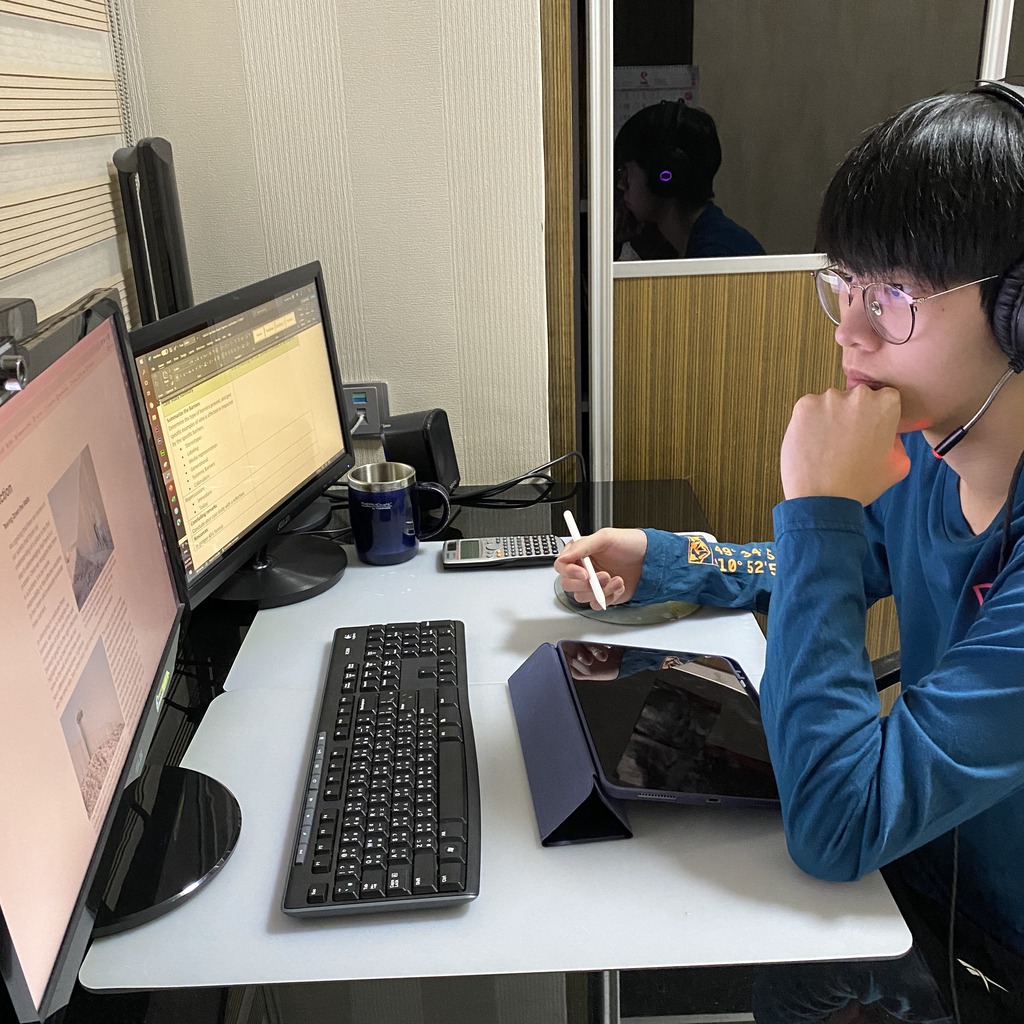
He believes that online schools are more suitable for students who are passionate and self-disciplined but lack a clear study plan—just like he once was, wanting to rediscover his motivation for learning but unsure how to start. “Every student has different learning styles and paces. Teachers in traditional schools must follow a fixed curriculum, so they may not be able to cater to individual needs. At OeS, however, teachers genuinely care about students’ progress and mental well-being, allowing them to adjust their learning pace independently. Students who develop self-discipline and time management skills can achieve twice the results with half the effort."
Michael continued that after completing assignments, students can submit them through the system, and teachers usually grade them within three days, providing constructive feedback and opportunities for real-time online interaction. In addition, students have one-on-one English practice sessions with their teachers each week, which helps motivate and engage them in learning the language.
Applying to university early.
Attending OeS does not mean students can secure university admission without effort. Michael candidly stated that his initial goal in enrolling at OeS was to gain university entry through his own hard work. OeS students do not need public exams; they can apply directly to universities worldwide using a grade calculation of 70% coursework + 30% final exams. Some students opt to continue their current secondary school courses and prepare for the DSE, providing an additional pathway to university admission.

He candidly acknowledged that OeS’s flexible learning model may not suit students with lower self-discipline, who might struggle with independent study. In contrast, traditional schools offer a structured system where teachers guide students through a set plan. While online schools lack the campus experience and face-to-face peer interactions of traditional secondary schools, OeS provides one-on-one classes as well as small group sessions of 2 to 6 students, including group discussion segments to build interpersonal skills.
OeS follows the Ontario Secondary School Diploma (OSSD) curriculum from Ontario, Canada, enabling earlier university applications than DSE students. Michael submitted his applications in November last year and received admission offers from universities in Hong Kong, the UK, and Canada between February and March.